Forest technology at Penn State Mont Alto and comments on forestry in general.
Thursday, October 23, 2014
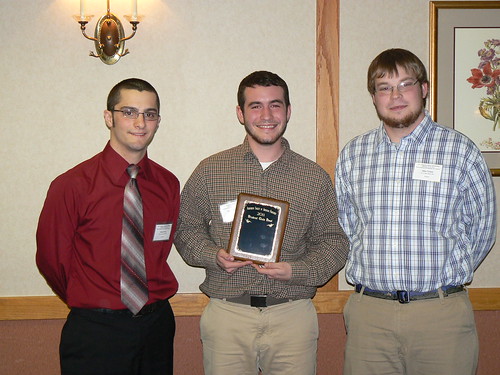
Mont Alto Forestry Students at the Keystone Chapter SAF
Sunday, October 12, 2014
Society of American Foresters Convention at Salt Lake City
Here are the quiz bowl participants . Aaron Lewis, Alex Storm, Ethan Mansfield, and Coby Salmon. Alex was on the winning team! (Aaron and Coby are current Mont Alto students. Alex and Ethan graduated this past May and are now at UP). This year students from different schools were combined with Canadian and international students.
On Friday we did a little sight-seeing and visited scenic Provo Canyon where there are some very interesting parks and the amazing Bridal Veil Falls.
Thursday, May 16, 2013
Visit to Fort Indiantown Gap
Visiting an oak harvest site where several herbicide treatments were applied to improve regeneration success.
Then we visited a prescribed burning site. This field has to be kept open for military operations. It's a great opportunity to perfect safe burning techniques for this area.

Saturday, February 19, 2011
Penn State Mont Alto Foresters at the Allegheny SAF conference
The Allegheny Society of American Foresters winter meeting, organized by the Plateau Chapter, was held in Clarion, PA on Feb. 16-18. Six Penn State Mont Alto forestry students attended the conference.
Mont Alto was victorious at the quiz bowl, defeating Allegany College of Maryland and West Virginia University! Congratulations to team members Derek Furry, Shane Strommer, and Mike Trisket for their winning performance.
Among the great presentations at the conference were silvicultural remediation for degraded hardwood sites, managing for liability issues, improving foresters' involvement with the public, and examples of outdoor recreation.
Friday, October 23, 2009
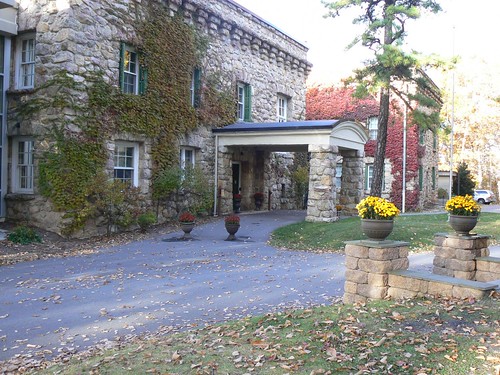
Keystone Chapter SAF Fall Meeting
For the technical part of the meeting Ellen Schultzabarger, Ecological Services Section Chief of the DCNR Bureau of Forestry described the Pennsylvania Natural Heritage Program (formerly the PA Natural Diversity Inventory). Rich Schockey, Ecological Services Environmental Review Specialist discussed the importance of and the need to protect forested buffers for water conservation. The natural heritage program now has a convenient online tool to help find endangered species in most parts of the state to help planning for forestry and other operations. It will also help with the permitting process.
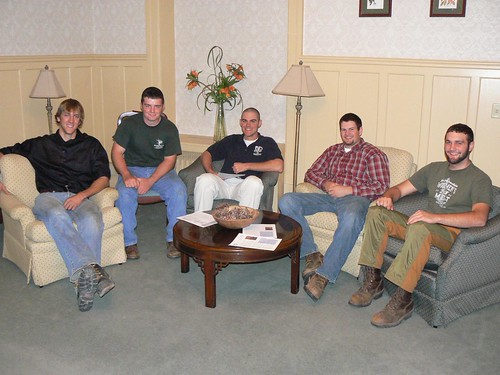
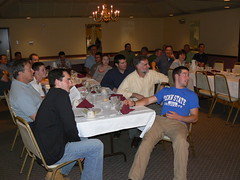
Penn State Mont Alto forest technician students Ethan Wall, Josiah Knopsnider, Phil Bietsch, Tim Benedict, and Severin Thierwechter attended the meeting and are seen here relaxing in the mansion's lounge. Thanks to SAF members for sponsoring the students.
During a brief business meeting the Keystone chapter elected new officers:
- Chair: Steve Wacker
- Vice Chair Dave Nelson
- Sec./Treas. Craig Houghton
- Executive Committee Members: Mike Kusko, Jr. (past chair), Scott Kurtzman, and Rachel Billingham
Friday, October 09, 2009
Charles C. Mann at the SAF Convention
The keynote speaker at the Society of American Foresters national convention in Orlando (10/1/2009) was Charles C. Mann, the author of 1491: New Revelations of the Americas Before Columbus. In this fascinating book, Mann shows that the Native American civilizations very significantly impacted the environment of North and South America in the centuries before the Europeans came.Mann shows that it wasn't just the Aztecs, the Mayans, and the Incans who made the changes. Indians in the Amazon Basin manufactured thousands of acres of fertile soil from broken pottery and charcoal to grown their crops. They also planted fruit and nut trees extensively throughout the area. The Indians of North America thinned the forests with fire to ease travel and to make hunting better. They also bred corn to become the crop we find so useful today and extended the range where corn could be grown.
The great tragedy Mann describes was the widespread deaths of Indians from infections of the Eurasian diseases to which they had no immunity. Unlike Europe and Asia, the Indians found no domestic animals in the Americas. Consequently they didn't experience the flu and other diseases and had no immunity. Once the European settlers arrived they found an essentially depopulated continent where the forests had grown back thicker than they had been in thousands of years.
With Columbus weekend upon us, what is the signifcance of these new archaeological discoveries for forestry? Many environmentalists believe that before 1492 there was a veritable Garden of Eden in the Americas, where the Indians lived, but had no noticeable effect on the environment. Consequently, the best policy would be to return to these pre-Columbus conditions and return the environment to its pristine state. But if there was no Eden, then we have the responsibility to manage the forests for the use people and to ensure sustainability. It's just that there is no perfect state to return to. It's up to us to figure out what we want the forests to look like!
Tuesday, October 06, 2009
Mont Alto Students at the Society of American Foresters Convention
This year’s Society of American Foresters Convention was held at the Walt Disney Coronado Springs Resort in Orlando, Fl. Four Penn State Mont Alto students attended the convention and competed in the Quiz Bowl.
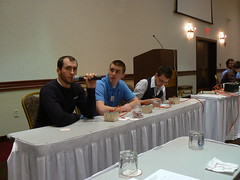
Alex Lamoreaux, Hunter Stauffer, Frank Grano, and Severin Thierwechter preparing for the first round.
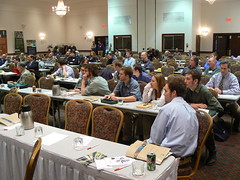
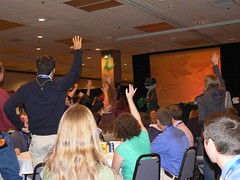
A large, enthusiastic crowd watches the competition. Mont Alto beat West Virginia University in the first round and lost narrowly to Oregon State University in the second round.
Scenes around Coronado Springs. The Disney resorts do a good job of protecting the environment and incorporating wildlife. Check out Alex’s blog for pictures of birds and other wildlife.
Also at the meeting we got a chance to visit with Mont Alto forestry alumni who are currently studying at University Park.
Thursday, June 04, 2009
Ned Smith Center Visit
The program featured a presentation by retired biology teacher John Laskowski, the "Mothman". John is one of the foremost experts on moths and butterflies of Pennsylvania's forests. A fun part of the visit was a short hike across the center's bridge over the Wiconisco Creek to see a chainsaw sculpture of wildlife species carved from a white pine log. John also pointed the rare forest plant, minniebush (Menziesia pilosa), which grows by the banks of the creek.
Friday, February 20, 2009
Quiz Bowl at the Allegheny SAF Meeting

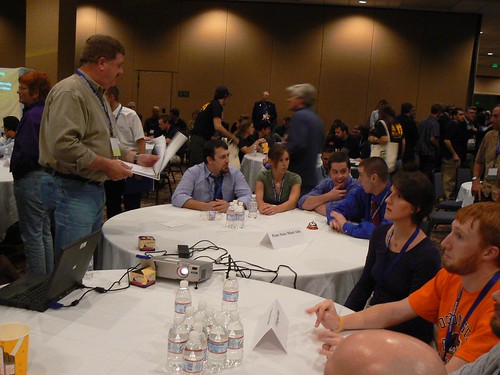
Watching the Quiz Bowl
The theme of the meeting was Changing Forest Dimensions and included a wide variety of presentations about the changing nature of forestry in the Mid-Atlantic region. Follow this link to the Allegheny SAF web page.
Sunday, November 09, 2008
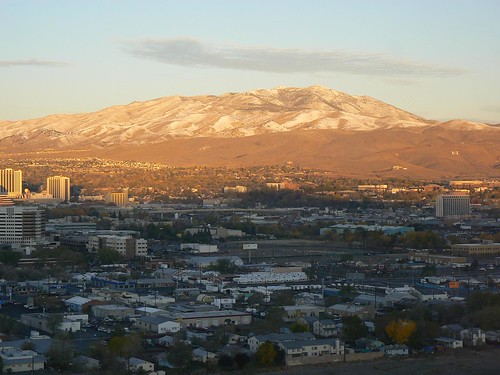
View from the Grand Sierra
This is the view at sunrise from our rooms on the 24th floor of the Grand Sierra Resort Hotel.
Check out the map of Reno. The city is in a basin surrounded by mountains. Lake Tahoe is to the west.
Mont Alto Foresters Meet Bennie the Horse
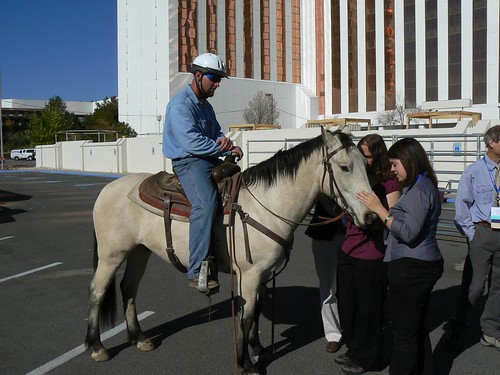
In what must be one of the most unusual items to appear in the silent auction for the Foresters Fund, Bennie was offered by the BLM (Bureau of Land Management). Bennie is one of thousands of wild horses available for adoption from the BLM. By law the captured horses, who are not native to the American Plains and can cause a great deal of environmental damage, cannot be destroyed. They must be cared for by BLM until they can go to deserving homes. Don't worry, the auction winner must qualify as an owner and could donate Bennie back until a good home can be found.
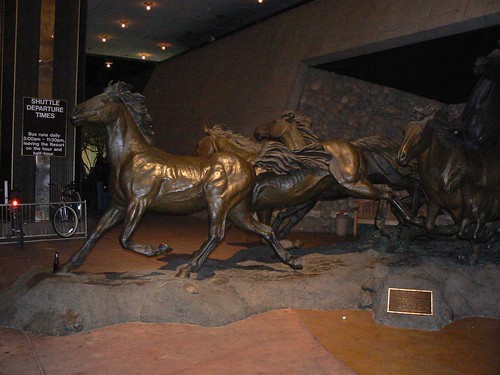
These horses, outside the hotel, don't ever actually go anywhere!
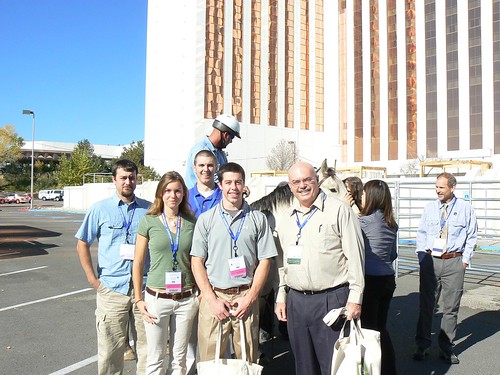
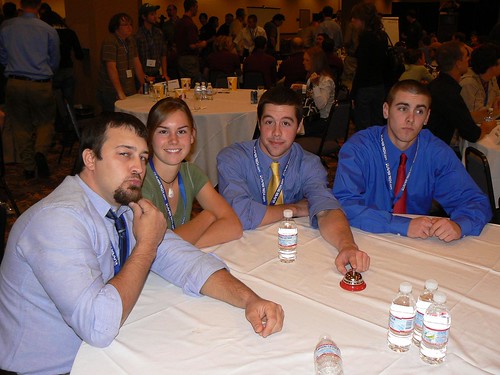
Mont Alto at the SAF Convention in Reno


The eventual winner was Utah State University. In addition to the trophy, they won prizes from the Geico Gecko. (Each member won a toaster that branded the Gecko on the toast!)
Sunday, May 18, 2008
Keystone Chapter SAF Meeting Looks Up to Fire Towers
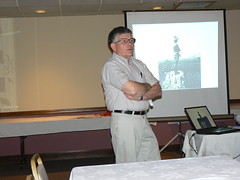
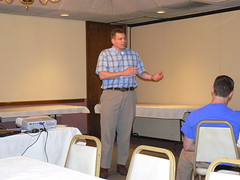
Merl Waltz presented the History of Fire Towers in PA with a series of historical photos. The use of fire towers began at Mont Alto as the students were detailed to fight forest fires. At first they climbed prominent hills and even trees. Eventually makeshift towers were secured to tall trees. These eventually developed into manufactured steel towers placed strategically around the State. It became a source of community pride to have a functioning tower. Merle described the often tedious work of a fire tower observer and how the workers coped with the long hours and strenuous conditions.
Eventually fire towers gave way to aerial spotters. Today, with more people living in rural areas, the use of airplanes, and better communication (cell phones and radios) there is less need for towers. A few are still in use however. Others suffer from vandalism. Some may be preserved for their historical value.
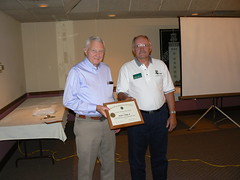
Chapter chairman Mike Kusko (right) presents Ralph Heilig with his 50 year SAF Golden Membership Award.
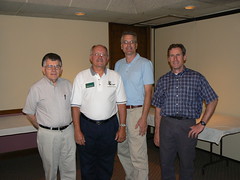
Keystone Chapter officers were elected at the meeting. From left to right: Merle Waltz (executive committee), Mike Kusko (Chairman), Scott Kurtzman (executive committee), and Craig Houghton (Secretary-Treasurer). Absent were Steve Wacker (vice-Chairman) and Rachel Billingham (Executive Committee).
Thanks to the Keystone Chapter members for generously sponsoring the students. It was greatly appreciated after a day of timber harvesting at summer camp!


.jpg)